
The South Will Rise Again?
On college football’s relationship with the American experiment.

Next month, I am celebrating my 35th birthday and hosting a fundraiser to support some of my new initiatives. One of those is Alex Palace, Inc., a non-profit organization devoted to creating spaces for community, engagement, and fun for young adults with disabilities. We had our first events earlier this year, including an Autism Valentine’s Day Dance, and we’ve got a summer packed with programming.
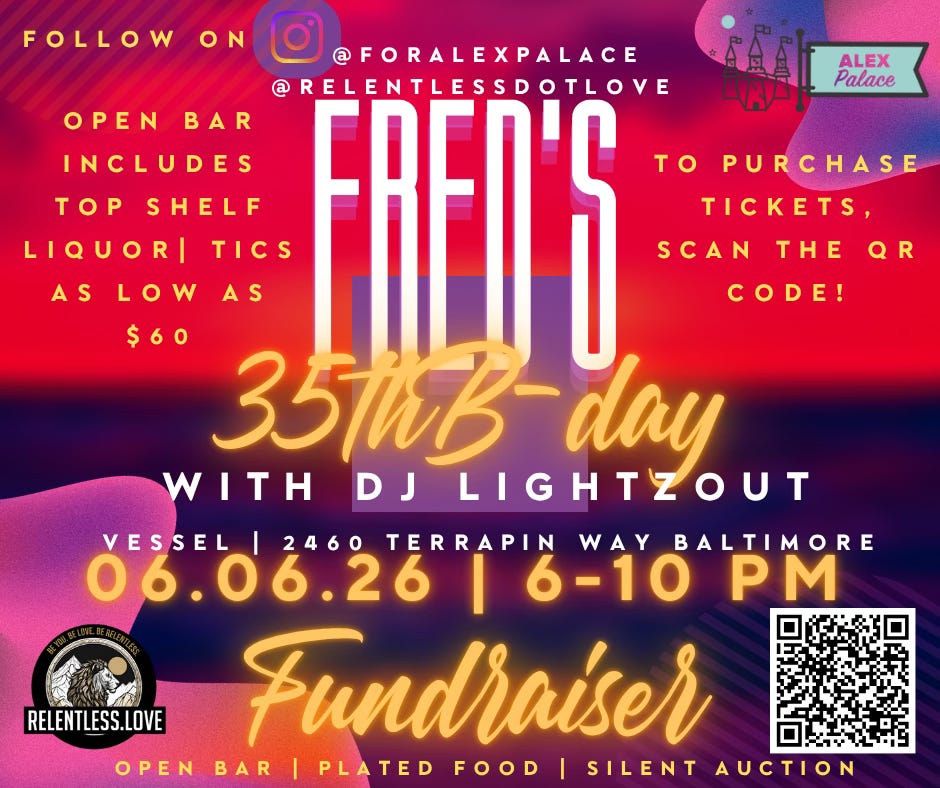
If you’re in the DMV or Baltimore, you definitely want to join us! On Saturday, June 6, we’ll be at Vessel in Baltimore with the best DJ in the DMV, a plated buffet meal, and an open bar with top-shelf libations. You’ll have a great time supporting a great cause. Who says no?
You can learn more about the fundraiser and purchase tickets here. Want to support but can’t physically attend? No worries at all. Supporters tickets are priced as low as $35. If you prefer to make a tax deductible contribution, you can do so here. We appreciate you. Bless up!


When forced to describe myself in a limited amount of time, the description has generally been the same for the better part of a decade.
I am a Black man from the South.
Each of those identities is central to who I am, what I believe in, and the personal ethos I’ve developed for how I live. It doesn’t mean my way of living, thinking, and being is superior to anyone else’s, nor does it suggest that everyone should prescribe to how I see and navigate the world, but my cadre of knowledge and experiences, particularly the data points gathered in my years growing up in Georgia, traveling across the South for school and work, and coming-of-age in Louisiana are essential to my being.
Southerners always understand, without further explanation, why calling the South home matters enough to state it. Many of them, in fact, find it puzzling. “The accent is almost as noticeable as the fact that you’re Black, Fred”, I’m sure many of them say in their heads. But tracing roots to the American South, and to anywhere across the Global South for that matter, is a deep ancestral connection often left unspoken at the peril of the ignorant. People from Los Angeles and Chicago love being from those cities as much as I love having grown up in Atlanta. It shapes who you are.
The South has been in the news a lot lately, and not for the right reasons. There’s the political and socioeconomic aspect, which impacts everyone, even those who claim not to care about or “do politics.” In the wake of further dismantlement of the Voting Rights Act, many of our elders have taken to the same streets and courthouses they defended in the fifties and sixties just to gain the very rights we so often take for granted. The Party of the Confederacy, most referred to in contemporary politics as the Republicans, seeks to bring us back to a jurisprudence that looks more like 1963 or 1863 than the second act of the 21st century.
The Voting Rights Act Is Dead. Now What?

A return to 19th-century jurisprudence has always been the ultimate objective of the modern-day death cult known as the Republican Party. What are we to do?
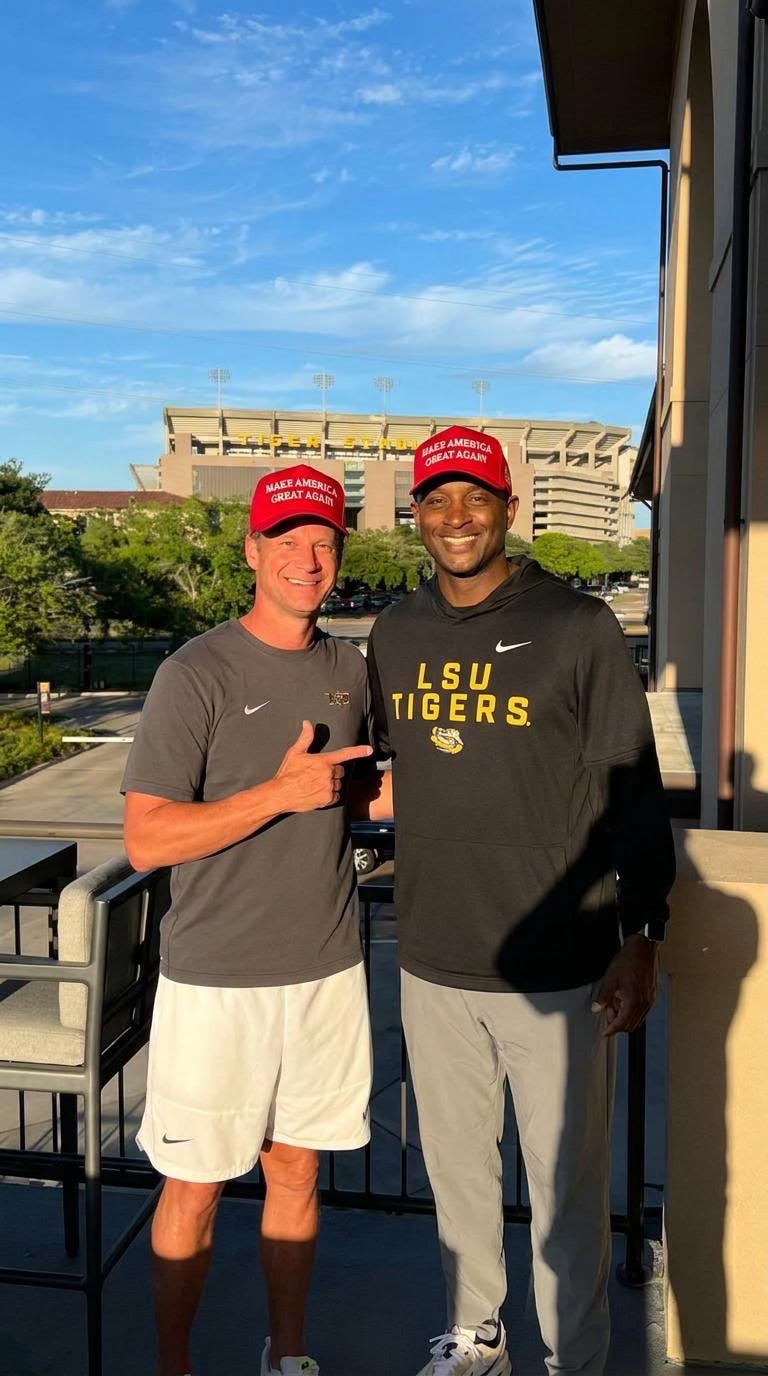
And then there’s sports, which, in this instance, actually does impact all of us, even those who (legitimately, unlike the politics crowd) don’t do sports. Lane Kiffin, the newly hired head football coach at Louisiana State University (LSU), sparked a real on and offline firestorm with comments he made to Vanity Fair. Having recently left the University of Mississippi to coach at LSU, Kiffin told a reporter that the response from families and athletes he is trying to lure to Baton Rouge has been far different from the response he received when trying to get many of these same Black athletes to come play in Oxford, Mississippi. Put another way, Kiffin was subtly saying that the racism in Oxford provided some barriers to bringing in elite talent that doesn’t exist in his new home, about an hour west of New Orleans.
RELENTLESS is a reader-supported publication, which means that the only money we make from this is from what lovely people like YOU offer up.
If you find these words or our message helpful, consider supporting us by buying a one-time, $10 cup of coffee using the link here. You can also support by purchasing copies of our books here or coppin’ some merch here.
We’d greatly appreciate it.
To his credit, Kiffin isn’t wrong. On its face, Oxford and Mississippi at-large do have a deeper and more noted history of racism to contend with than Baton Rouge. I am not always the best person to detail these histories, if for no other reason than I am an actual historian and political scientist. I know more than sometimes I wish I did, partly because moving through the world with a level of ignorance as to how vile racism has and can truly be probably means you sleep better at night. But just sticking to the football, LSU has never had a governor stand at the 50-yard line and deliver a rallying cry for the Confederacy days before the first Black student was supposed to enroll. Seriously, anytime I hear “I love Mississippi! I love her heritage!” chills run down my spine.
The problem with this assertion, however, is that, when subjected to strict scrutiny, it falls flat as a pancake. Kiffin’s comments weren’t not factual, but they also weren’t true, and they certainly weren’t made in good faith. Part of what has riled up nearly all the other universities and fan bases that make up the conference Kiffin coaches in (the Southeastern Conference, better known as the SEC) is that Kiffin dared to say the very things they’ve all agreed you do not say in public. In the wake of such a public betrayal, the flagship universities of Alabama, Georgia, Tennessee, and Arkansas have started going tick for tick, looking for any (un)reasonable nugget that can assert their school is less racist than their competitors. Seriously, y’all, what are we doing?
Sans a handful (Missouri, Texas A&M, Arkansas), I’ve been to each of the towns in the SEC. By and large, I must say, I felt welcomed. The Southern hospitality, as I have been so inclined to extend to others and wholeheartedly expect to be extended to me, was alive and charming. If the notes were racist, and I am sure they were from time to time, I missed them. Yet anyone with half a brain cell will tell you our experiences, especially if they are limited to carefully curated instances like campus visits, student government conferences, or football games, are hardly able to capture the essence of an entire town, let alone a university and a state.
This is where the football meets the politics.
In the wake of the Confederacy’s losing battle of the Civil War, men returned to homes, towns, and economies that were bruised and battered. The Confederates were humiliated, and they sought something, anything, to serve as an outlet for exercising their manhood and humanity. That desire, to be seen as men who weren’t failures, as men who did not fight and lose the most consequential battle known to their fellow men, carried on well into the 20th century. Football, in the decades after the Civil War, became a noble avenue for reasserting their Southern pride and heritage. Alongside the Lost Cause, the South looked to the gridiron to develop its own mythological ethos, one that painted over defeat in the war and the horrors of slavery, and instead built lies based on statues and tyranny. We don’t need to look at Berlin in the 1930’s to get a glimpse of fascist rule following brief stints of democracy. The Post-Reconstruction South is right there.
We talk a lot about sportswashing by other countries, which use their ability to host marquee events to project a positive image of an otherwise authoritarian or tyrannical political regime to the world. Yet we’ve never grappled with the fact that the Old Confederacy has done the very same thing for nearly a century. From Billy Cannon’s iconic punt return on Halloween night of 1959 to give LSU a win over Ole Miss, to Paul Bryant’s dominant run at Alabama, to Tennessee blazing a surprisingly trail for Black quarterbacks, the old Confederate States of America (CSA) and their flagship institutions have long used the game Americans are utterly addicted to to project images of strength. But can it last?
A few years ago, after decades of exploiting mostly young Black talent, the Supreme Court ruled that not allowing athletes to make money off their name, image, and likeness (NIL) was unconstitutional. Since then, college athletes have been able to make generational wealth off the millions they bring in for the bigwigs at their respective institutions. Ironically, this legal compensation has led to a decline in the old CSAs’ dominance in college football. The last three national title winners (Michigan, Ohio State, and Indiana) all hail from the Midwest. If you think that has absolutely nothing to do with what we’re seeing politically across the South, I have several books and documentaries for you.
None of these institutions can whitewash their history, even if they’d like to. The cities and towns they find themselves located in speak directly to the persistent presence and impact of the past, from the Transatlantic Slave Trade to Black Codes and Jim Crow to the very disenfranchisement of Black voters happening as you read. Interstate 110, which runs through Baton Rouge, weaves the way it does because it was cut through many prominent Black neighborhoods, including Valley Park and Old South Baton Rouge. Such displacement isn’t unique to Baton Rouge, or Louisiana, or the South, for that matter. Cities across the American landscape, from Detroit and Chicago to Omaha and Los Angeles, have their current collective shapes, grooves, cultures, and sounds as a direct byproduct of institutional racism. It may seem like a revolutionary act of defiance to encourage Black athletes to boycott SEC schools in response to the current efforts to disenfranchise Black voters, but beloved, where the hell are they going to go? I’ve been to Indiana, Ohio, Michigan, Oregon, and California – none of these places are exactly progressive bastions of hope glimmering with political will that clamors to finally make Black people whole in pursuit of the American dream. Until we get our 40 acres, or at least the equivalent of it, the brokenness of this experiment can never be made whole. And if we’re being honest about it, that’s kind of the point – of both America and college football.
What are we to make of this?
Answering that question is far better left to a twelve-part documentary or a 400-page book. Football, even for those who have no interest in it, is an integral part of the imagination (or lack thereof) of the American experiment. Its banality and brutality speak to our incessant need for binaries and state-sanctioned violence. Its core functions both separate friends and family and bring them together. Its folklore can promote systemic change and be a catalyst for disenfranchisement.
Kiffin’s comments, and the subsequent fallout from them, signify, however subtly, the anti-intellectual, void-of-nuance reality shaping our politics and stripping us of our basic human rights. It makes for great television, engaging podcast clips, and fine writing in mid-May. The challenge with a culture that centers football’s impact on and off the field, however, is that it will always ultimately fall flat as a banner for social and political change. Because eight months from now, Kiffin will probably have won 11 games and be competing for a national title, or would have had a disappointing season, with scores of rabid LSU fans calling for his head. Either way, it makes his sentiments irrelevant. It’s a zero-sum game. He either wins or he loses. And that binary works for a game. In the real world, however, it kills slowly and methodically. And therein lies the limitations of our nation’s grandiose sport.

This past year, I launched Alex Palace, Inc., a non-profit devoted to building community and providing programming and social inclusion events for those with disabilities. As we finalize our summer programming for 2026, we’d love to have your support in helping us spread the word about our organization and fund our efforts. If you can’t make the party but know someone in the DMV or Baltimore who may find value in our work, consider spreading the word.
You can also share our kickstarter campaign by clicking here.
We appreicate it!